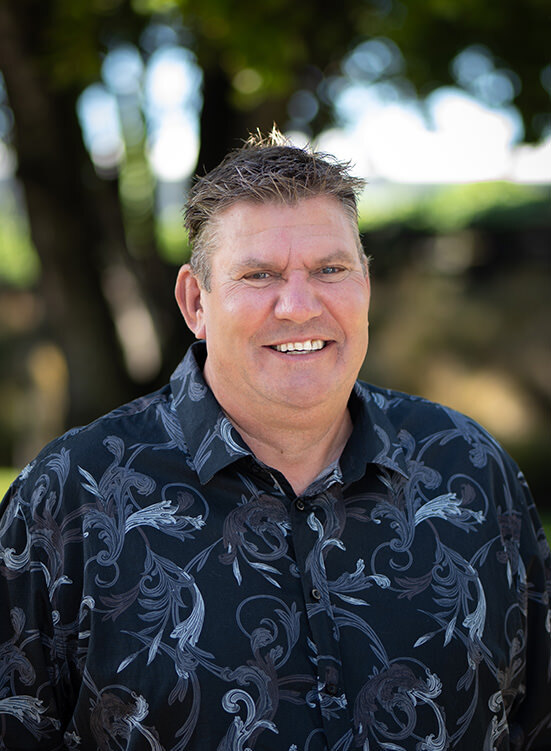
40 Years on the Chain: Rick Paulsen’s Story
This year marks 40 years since Rick Paulsen first walked through the door at Eliot Sinclair as a chainman fresh out of school. Four decades, two earthquakes, and a fair few pieces of surveying kit later, he's still out on site most days, and now the one showing the graduates how it's done. Here's his story, in his own words.
20 Oct 2026 | 4 min read
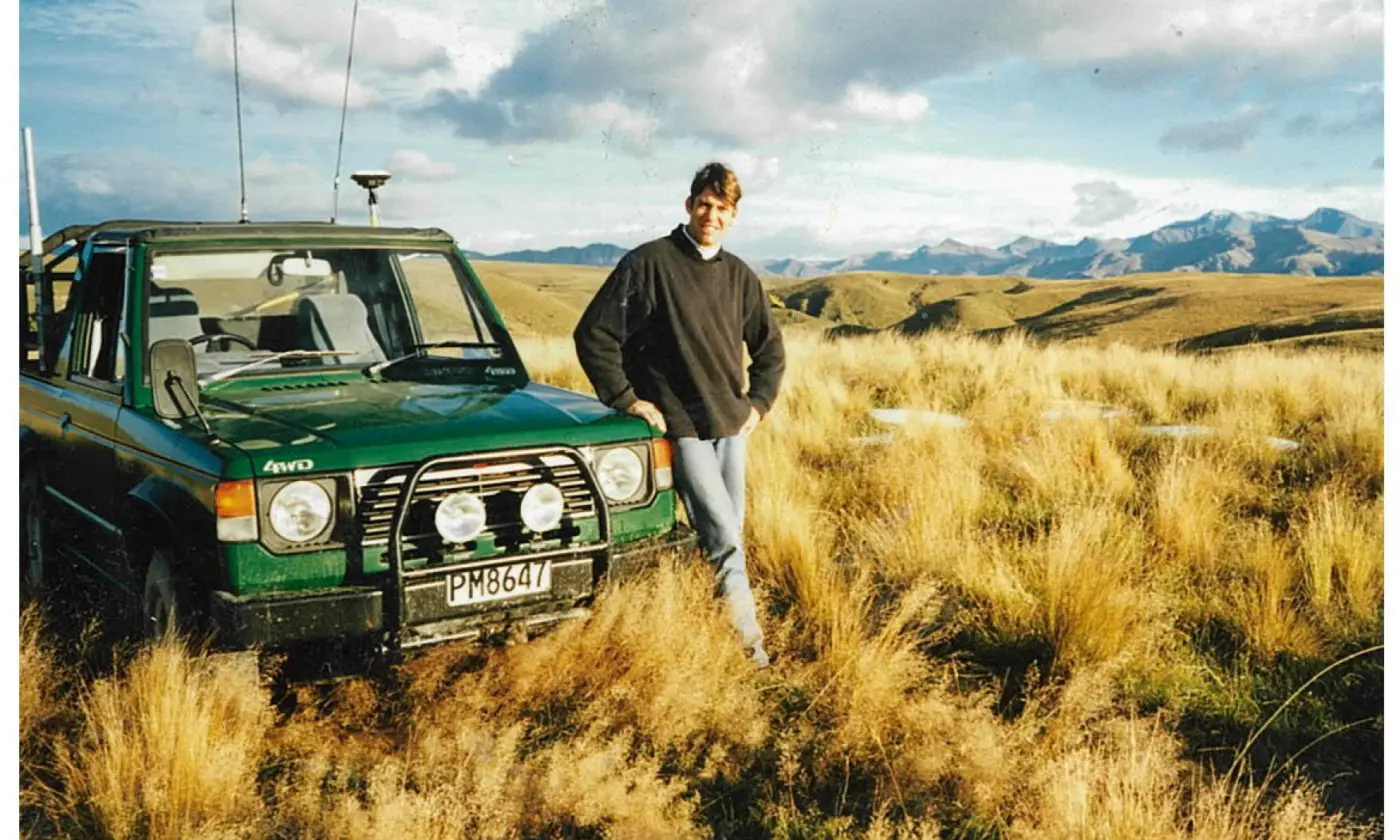
I’d left school and I was about to go away in the Air Force, but I had to wait six months for the intake. So I answered a job ad to become a chainman for Eliot Sinclair, and I thought “that sounds like me, I’ll give that a go” and I cancelled going into the Air Force and I’ve stayed ever since. Forty years later, and I love the place and the people, coming to work is still an enjoyment for me. I still can't quite believe it went that fast.
The Early Days
Being only 17 at the time, I was quite scared on my first day. I turned up to work. I remember my first day, I went out in the field levelling a subdivision at Steadman's Road with Jerry Shutte. I had no absolutely idea what I was doing, I'd never held a staff in my life, but luckily Jerry was a very good teacher. I remember not to wear white pants out in the field, because I had a white pair of trousers on that first day, don’t do that, not good as a surveyor to have white jeans. Those jeans were never worn again, that was it, straight in the bin.
A chainman or a field assistant was the person that banged all the pegs in at the other end of the instrument. The surveyor would do the measurements, and I’d be the fella that was wondering around with the pole, making the holes, banging the pegs and carrying all the gear.
When I first started, all the measuring was done with a steel band pulled taut by hand, we didn’t have electronic measuring devices. The measurements were accurate to the millimetre if you did it right, nothing like a tape measure blowing about in the wind. I still get a kick out of pulling that old chain out to show people what the job used to involve.
Bruce and Martin, who employed me, were the nicest people you could work for. They never looked down on anyone, everyone was on an equal footing, and that set the tone for how I've tried to treat people ever since.
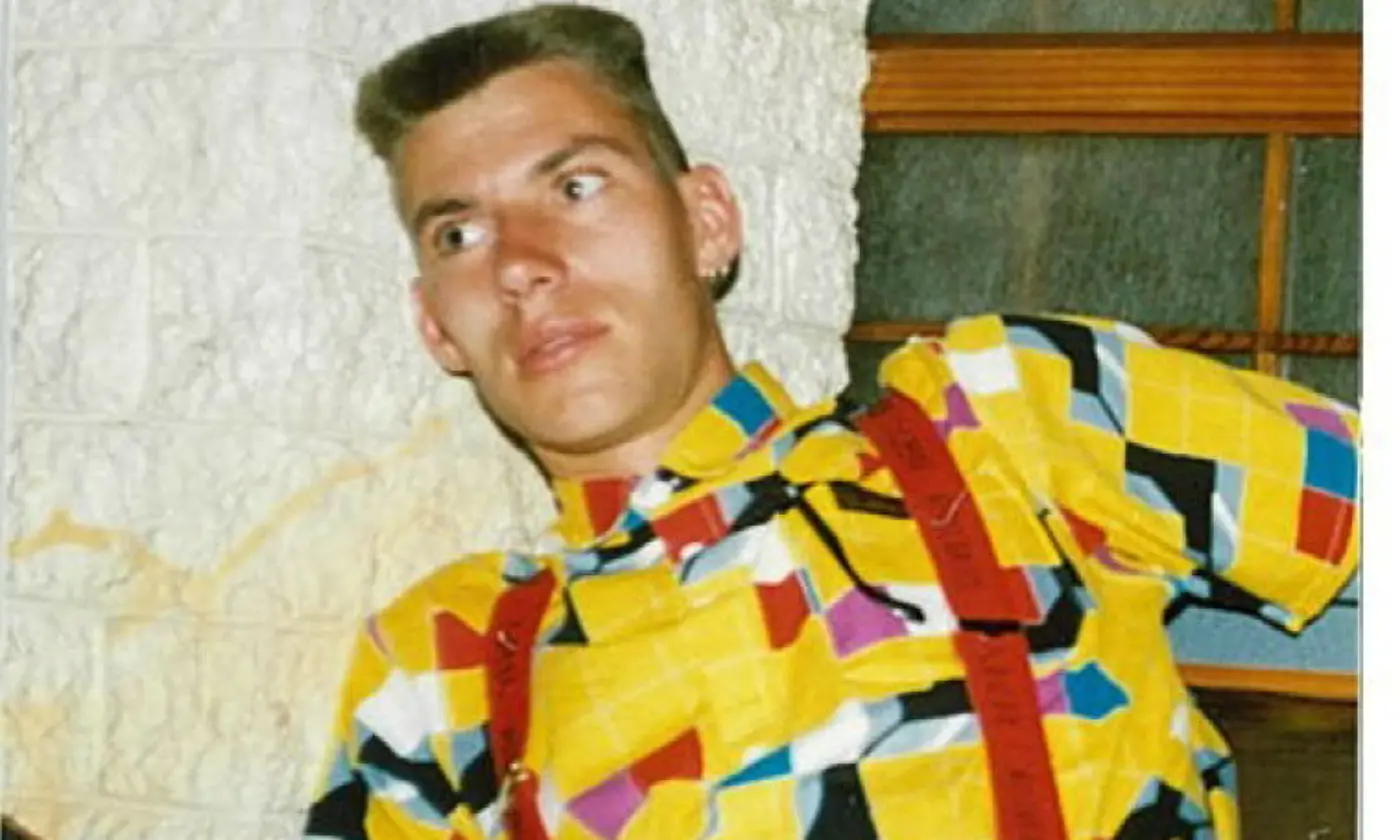
Six Weeks in Hong Kong That Turned into Three Years
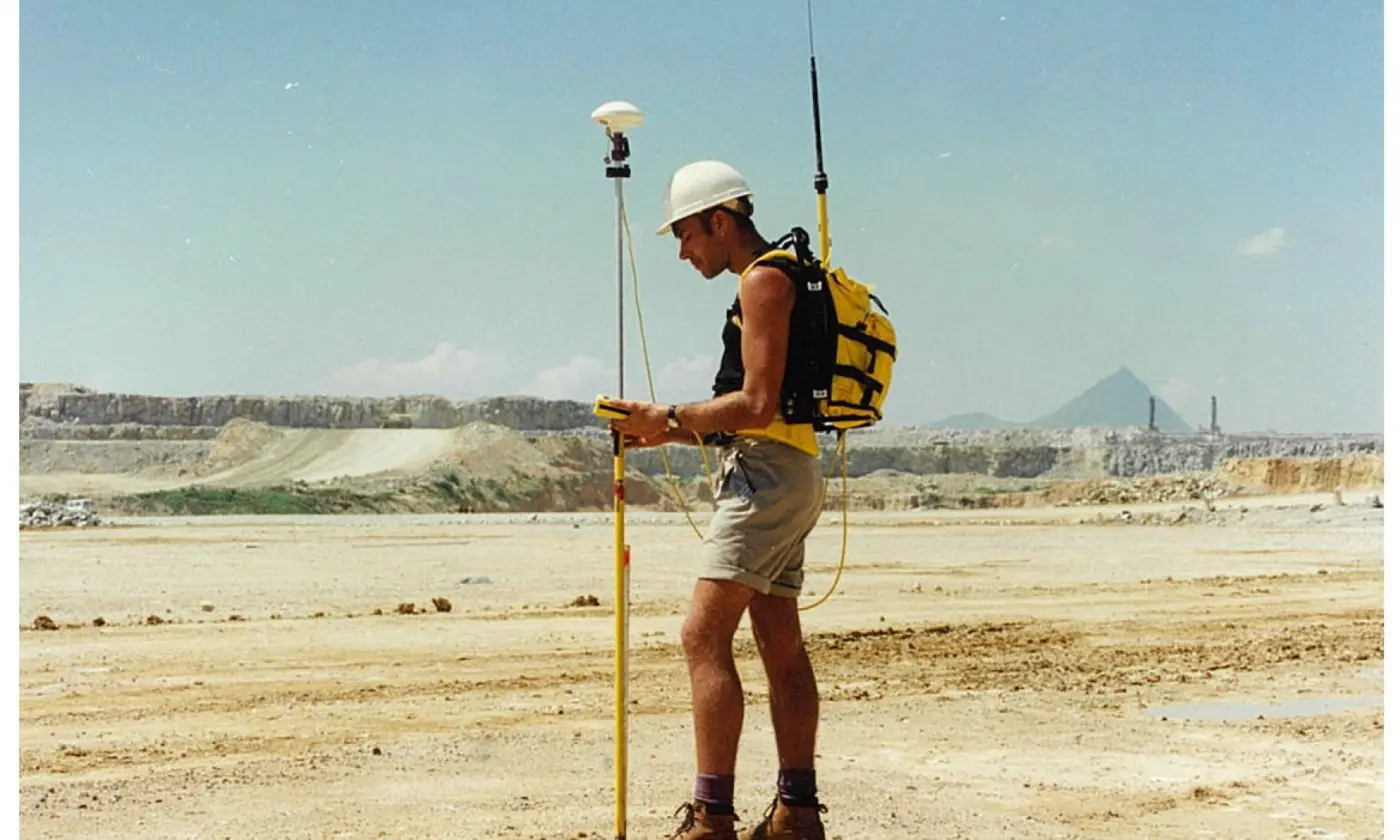
I went to Hong Kong for what was meant to be a six-week trip, doing hydrographic survey work on the new airport build. Originally, I went there to teach the boat driver how to drive a straight line in the boat. My boss up there asked if I'd like to stay on, and I learnt the whole system from whoa to go, driving the boat, setting the run lines, processing the data, producing the final plans. I ended up staying for three years doing that. When I came back to New Zealand, I was possibly the first person in the country to have used what we now call RTK GPS. I’d used the system in Hong Kong and brought it back with me and I was able to continue doing that work here.
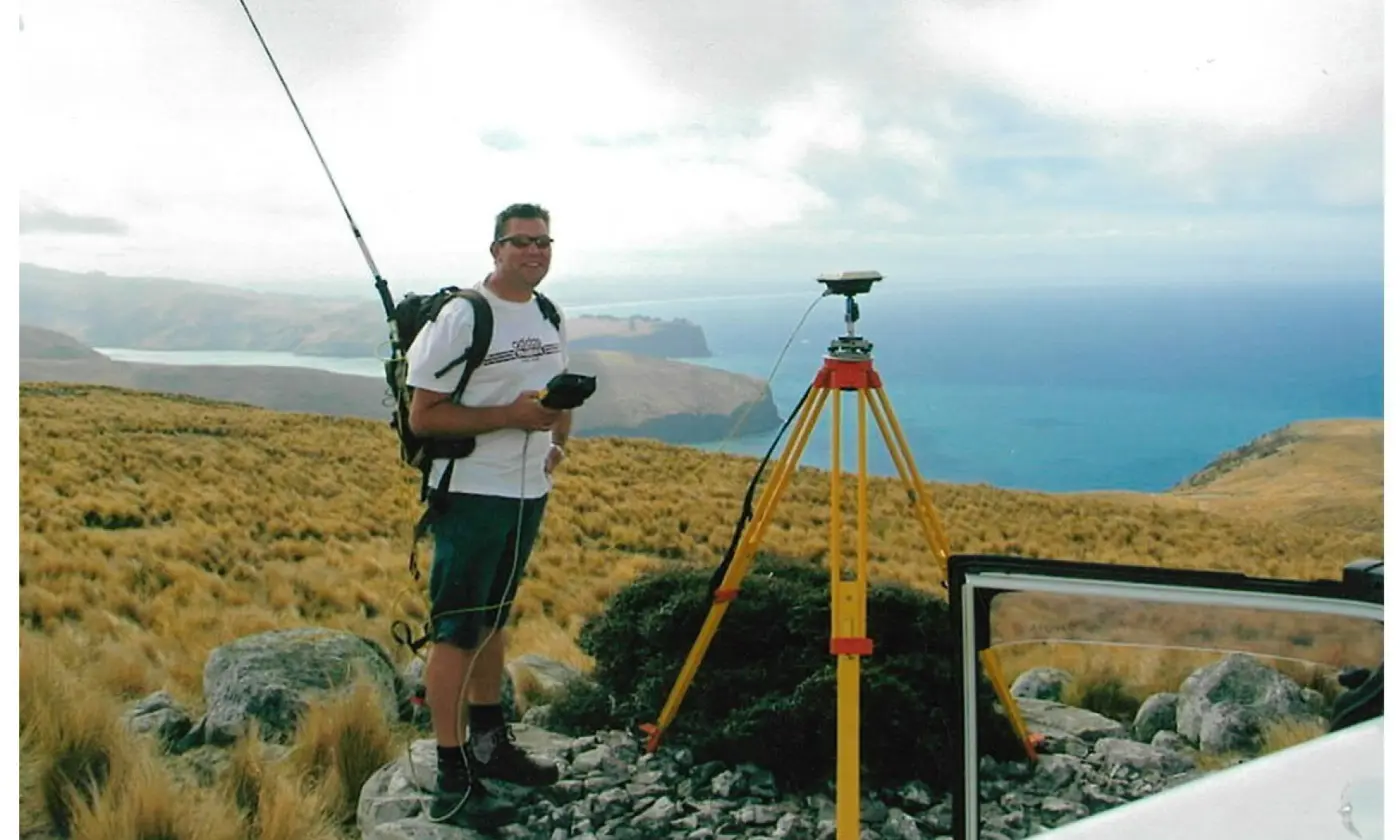
We were one of the first companies in the South Island to have that technology. We did a lot of work mapping irrigation and canals across the Canterbury Plains, work no one else could do at that scale back then. It's a strange feeling being the only one who knows how to use a piece of kit, but that's Eliot Sinclair for you. We've never been scared to try something new and go out there and give it a go, whether that was GPS in the nineties or robotic total stations after that, or the UAVs and lidar we use today.
The Earthquakes
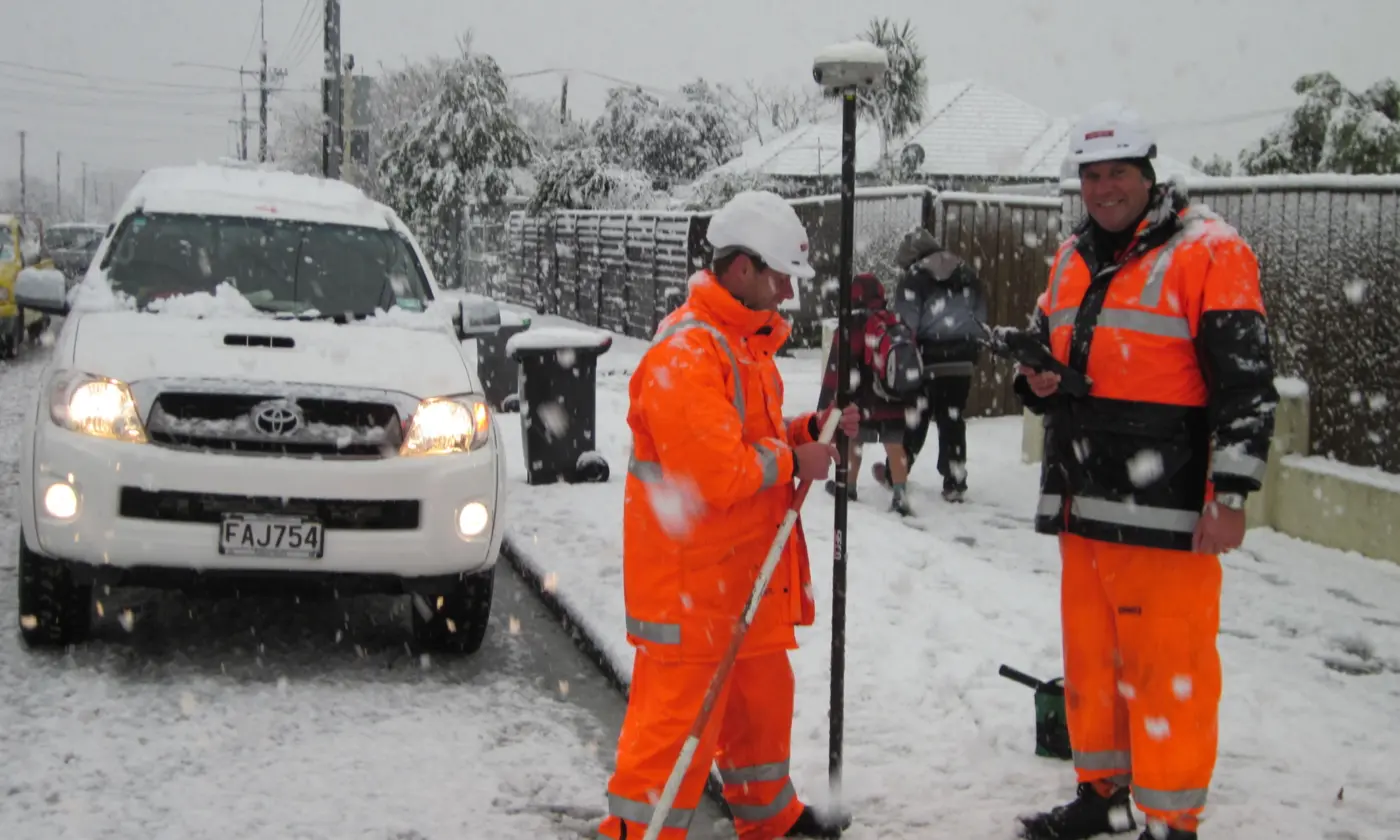
I’ve done so many memorable projects but helping the city out after the Christchurch earthquakes was a big thing for me. I saw my beloved city fall apart, and helping to get it out of the ground again is amazing. All the buildings I surveyed after the earthquake, to watch them come down, that was tough. Our job was to go through buildings doing floor level surveys, telling people no, they're no good, then a few weeks later they were demolished. It was bizarre, like walking into an apocalypse, people's smoko rooms sitting exactly as they'd left them.
We were lucky. We had the only GPS base station ready to go straight after the first quake, so we were back out working almost immediately, and after the second quake too, once we'd set one up at Wigram. I did a lot of topographic surveys for SCIRT so they could rebuild the roads, as well as surveying a lot of manholes for the sewer network. I spent a lot of time monitoring over at Lyttelton port to keep them operational. I’d be in the oil tanks, surveying round the pipework to keep fuel flowing to the city.
After the Kaikōura earthquakes, a memorable job was flying between slips by helicopter and landing on State Highway One. The geotechnical engineer with us looked up at the rockfall above us and said, “hang on a minute”. He painted a line on the road and told us not to go across that line. We didn’t think much of it, but after we’d left a rock came down and landed on the other side of the line.
What got us through it was each other. We joked constantly, even when there wasn't much to joke about. I lost some good mates over the years, and the thing that helps is that we still talk about them, still tell the stories, still laugh. They're not forgotten.
How the Job's Changed
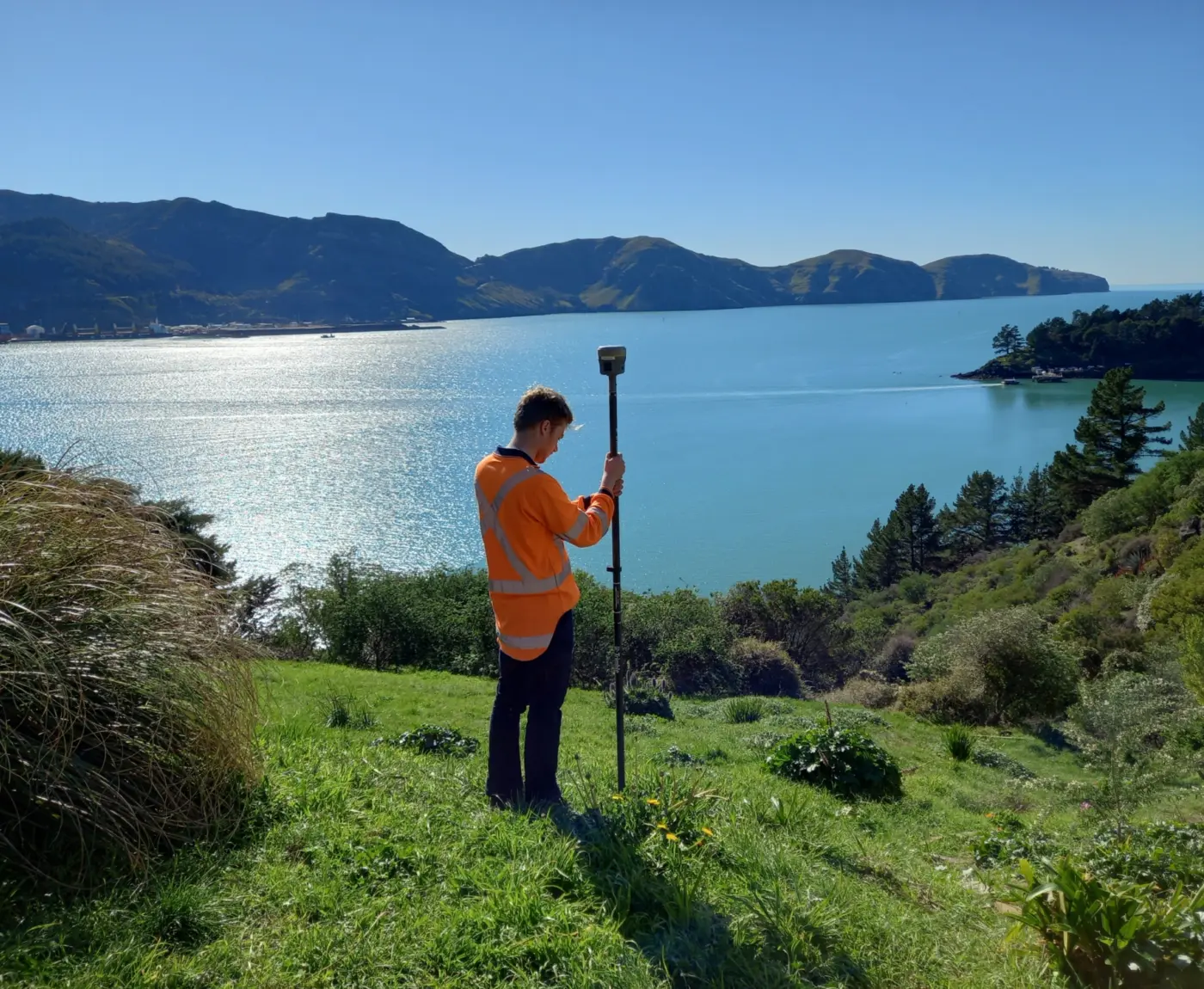
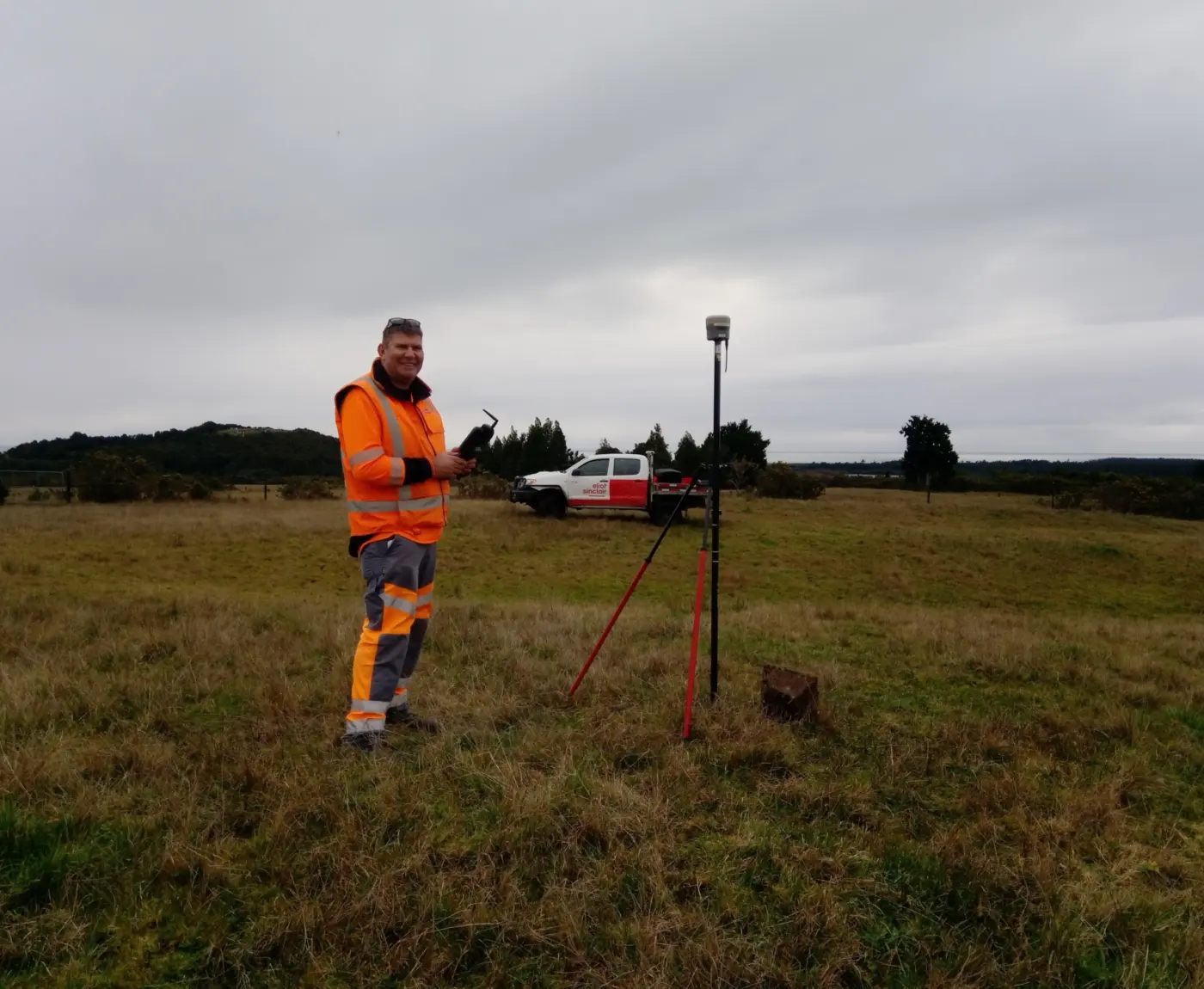
I've been through nearly every stage of how this industry works. From yelling instructions at a chainman standing pole in hand, to robotic total stations that track you instead of the other way round, to GPS doing eighty percent of our survey work, and UAVs (drones) that gather millions of points in the time it used to take us to get a few hundred. A topo job that took me a full day when I started, I can do in an hour now.
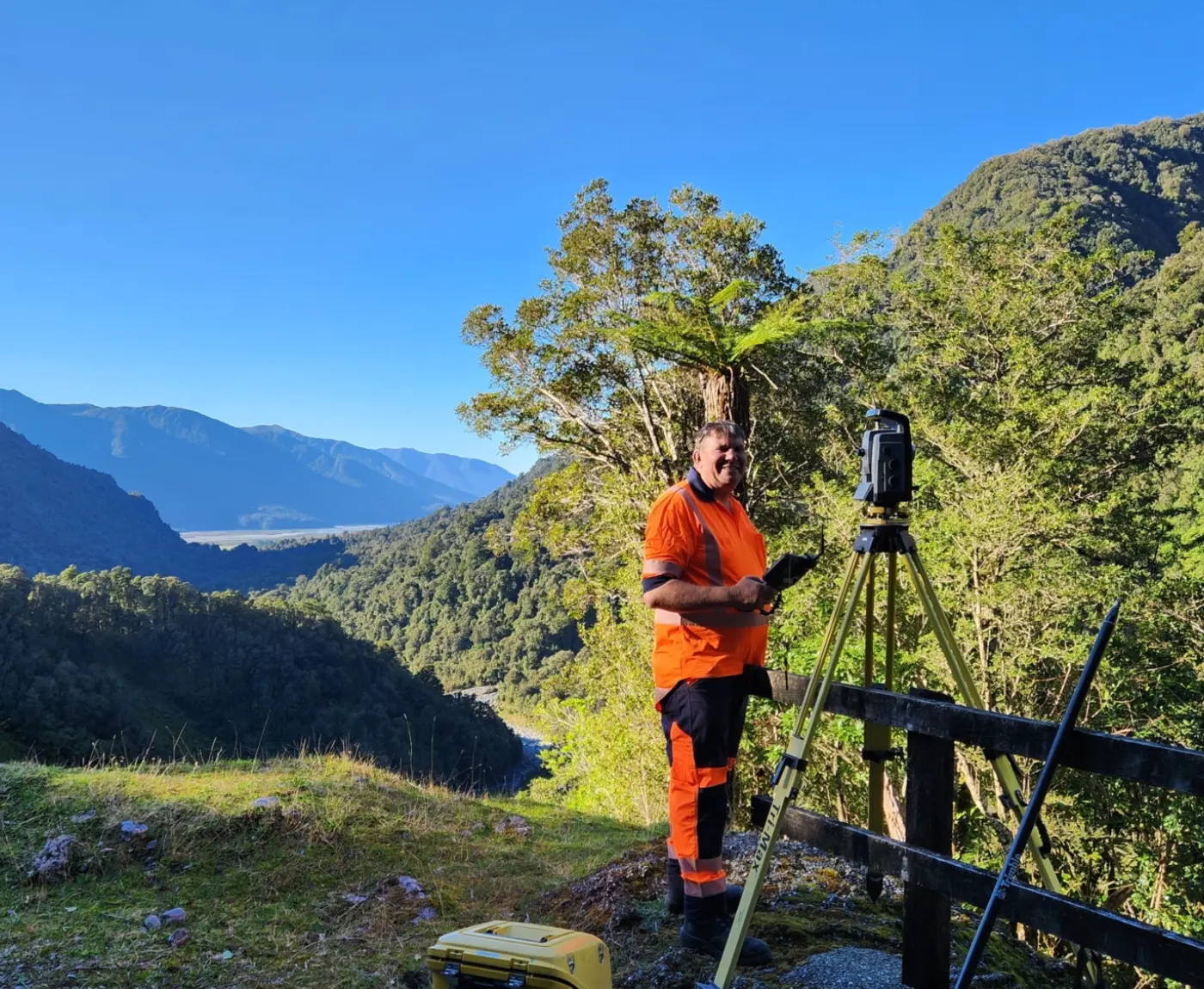
What hasn't changed is the standard we hold ourselves to. I'm probably more pedantic now than I've ever been. When you want millimetre accuracy, you take your time and you get it right, you don't rush off home. These days I'm the one taking graduates out and showing them the Eliot Sinclair way, and I tell them the same thing every time: watch first, listen to the people around you, because everyone here is exceptionally good at what they do. Don't come in pretending you know it all, because you won't. That's what a Survey Technician does, really. We do all the grunt work, and we go out and get the job done.
Why I'm Still Here
It's never really been about any one project, though I've had some good ones. It's the people. Morris Perwick was one of my biggest mentors, a hydrographic surveyor I spent years on boats with, in Hong Kong and back home. These days it's Darren Hocken, probably the best manager I've ever worked for, never too busy to sit down and help you out.
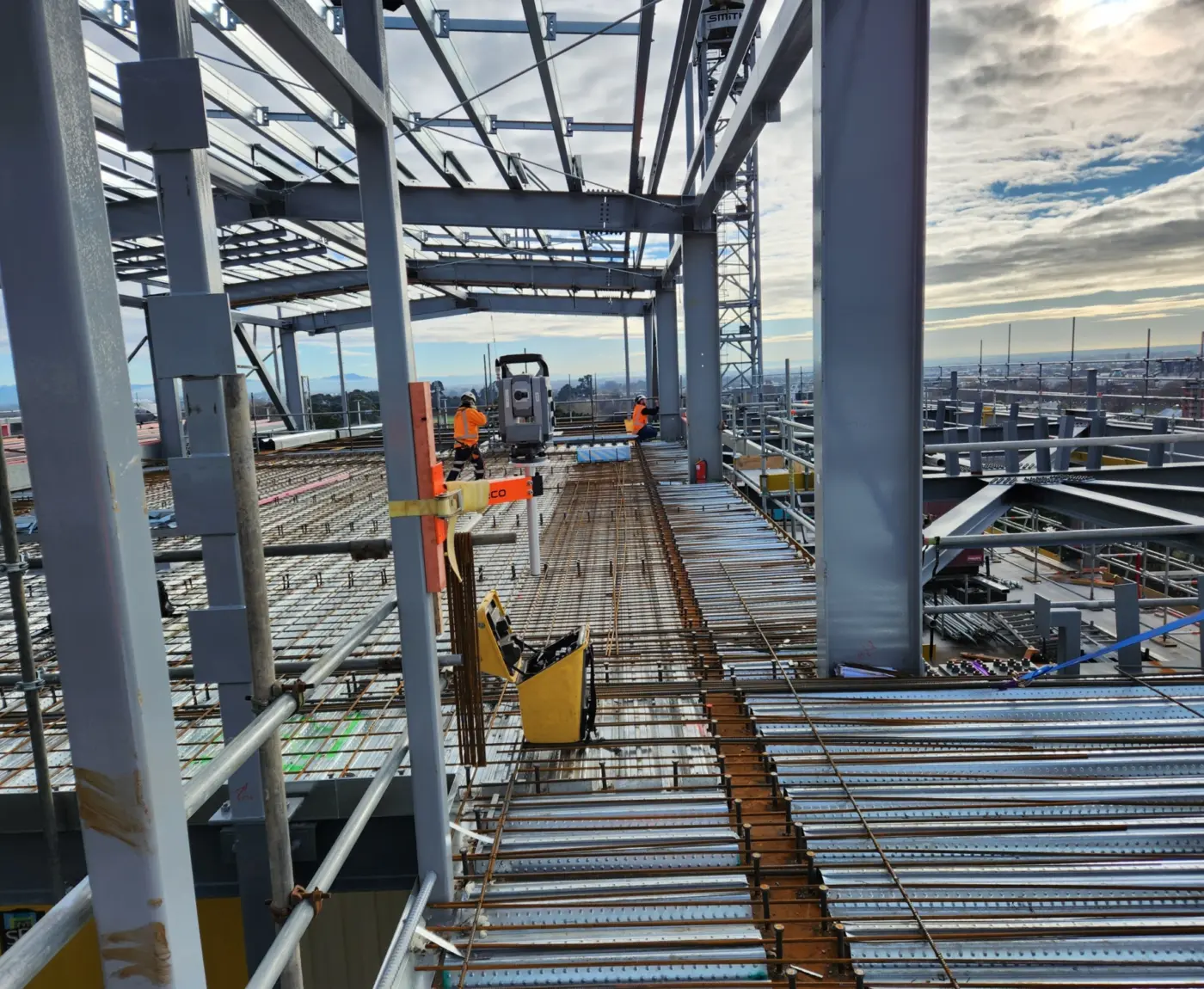
I'm proud of the ordinary things as much as the big ones. There's a kerb I set out for Fulton Hogan down at Rolleston that I point out to my kids every time we drive past. There's the Wigram subdivision that got people back into homes years ahead of schedule after the earthquakes. There's the new tower going up at the hospital. Every one of those, you remember.
Forty years, and I've gone from being told what to do, to being the one showing the young ones how it's done. I never did finish that diploma, Hong Kong got in the way of that, but I don’t think it’s held me back. What’s kept me here is pretty simple really: the people and coming to work every day being something I actually enjoy.
More Insights
40 Years on the Chain: Rick Paulsen’s Story
20 Oct 2026
This year marks 40 years since Rick Paulsen first…

International Women’s Day 2026 | Christchurch
24 Feb 2026
Eliot Sinclair is proud to host our third annual…

Christchurch Development Contributions Policy 2025
12 Sept 2025
Christchurch City Council has finalised the…